.svg)





























Virtual assistants have become a core part of modern business operations, helping companies streamline workflows, control price pressure, and scale faster without adding internal headcount.
From bookkeeping and project management to customer support and sales, hiring VAs is increasingly seen as a cost-effective way to improve efficiency across various industries. As remote work expands, businesses are rethinking how they handle daily business processes.
At Remote CoWorker, we’ve gathered 25 virtual assistant statistics that show how demand is growing, where adoption is strongest, and why organizations are turning to virtual assistants with specialized skills to support critical functions.
Key Virtual Assistant Statistics
1. The global human virtual assistant market is projected to reach $29.3 billion by 2031
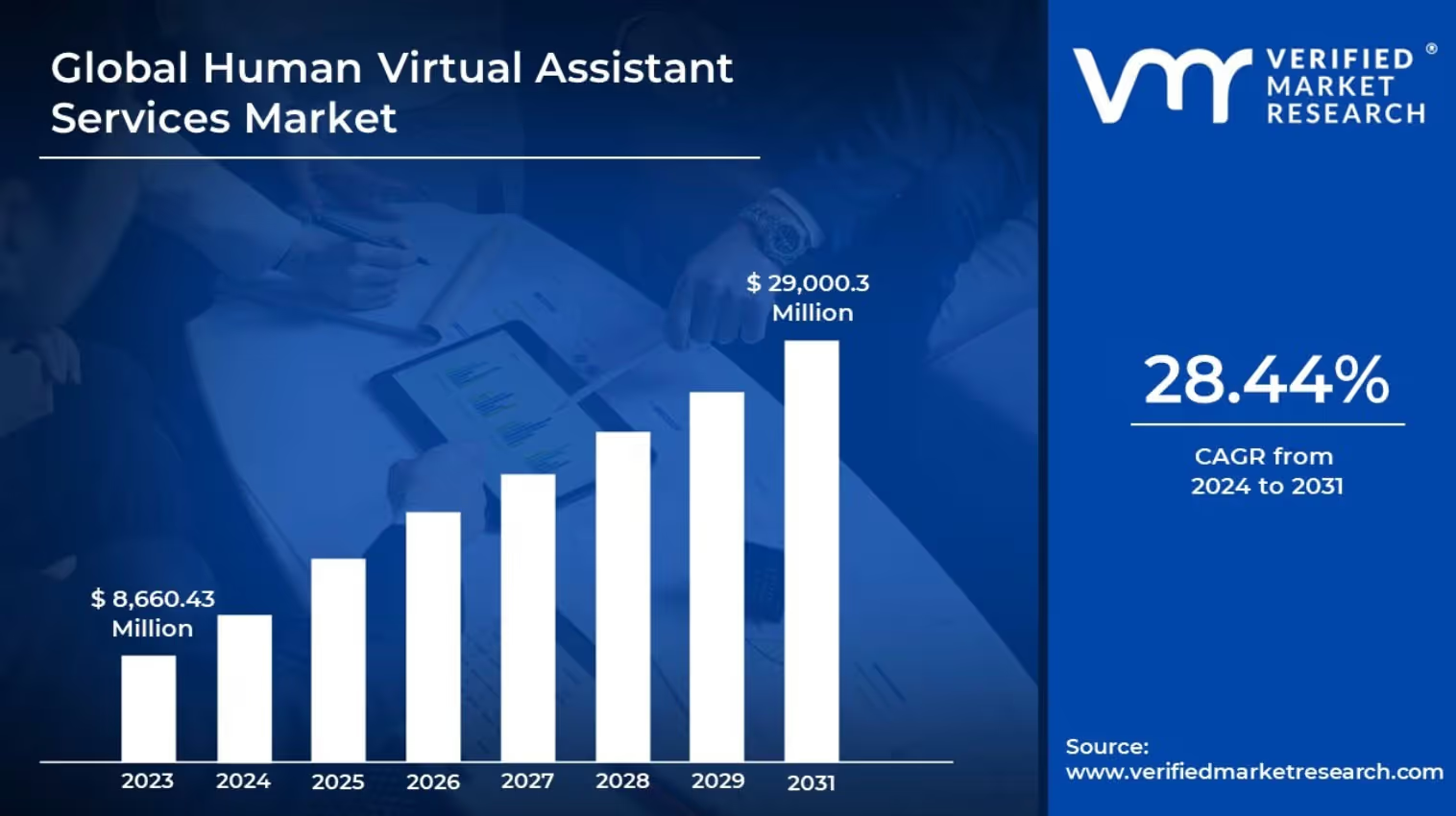
The global virtual assistant industry was worth approximately $8.7 billion in 2023, and it is expected to grow at a compound annual growth rate (CAGR) of 28.4% during the forecast period.
This estimate includes the human VA market share only and does not include AI tools such as chatbots.
Source: Verified Market Research.
2. Job postings for virtual assistants increased 35% year over year
This increase from 2023 to 2024 signals rapid growth in demand for outsourced roles. This reflects a broader shift as more companies delegate administrative, customer support, marketing, and operational tasks to virtual assistants rather than expanding in-house teams.
Rising demand is being driven by remote work normalization, cost pressure, and the need for flexible staffing across multiple business functions.
Source: ai2people.
3. Approximately 70% of medium and large enterprises now use virtual assistants
This level of adoption shows that virtual assistants are no longer limited to solo entrepreneurs, startups, and small businesses—they are now embedded in enterprise workflows as a scalable alternative to adding headcount.
Source: ai2people.
4. Nearly half of companies hiring virtual assistants have 1,000+ employees
Virtual assistants are not limited to small businesses. About 49% of companies using VAs employ more than 1,000 people, indicating strong adoption among mid-market and enterprise organizations.
Larger firms often use virtual assistants to extend internal teams, reduce support backlogs, and scale operations without increasing headcount.
Source: AOVUP.
5. About 67% of business owners have hired at least 1 virtual assistant
Approximately seven in 10 business owners reported hiring at least one virtual assistant, reflecting broad acceptance of remote support roles. Adoption has been strongest in functions like customer support, marketing operations, and sales—the most in-demand VA services.
Source: AOVUP.
6. Hiring a virtual assistant can cut labor and overhead costs by up to 78%
Eliminating office space, equipment, benefits, and non-billable downtime associated with in-house roles can dramatically reduce costs for a business. Additionally, outsourcing virtual assistants makes it possible to hire for specific skill sets without spending as much time and resources on onboarding and training.
Source: AOVUP.
Virtual Assistant Statistics by Industry and Use Case
7. Healthcare virtual assistant providers reported over 1,000% revenue growth from 2021 to 2024
Companies specializing in healthcare virtual assistants have seen explosive growth as medical practices increasingly outsource billing, insurance verification, appointment scheduling, and patient follow-ups.
This surge highlights how heavily regulated, admin-intensive industries are adopting virtual assistants to reduce overhead while maintaining service quality.
Source: ai2people.
8. Digital marketing agencies, ecommerce businesses, and customer support companies lead in VA adoption
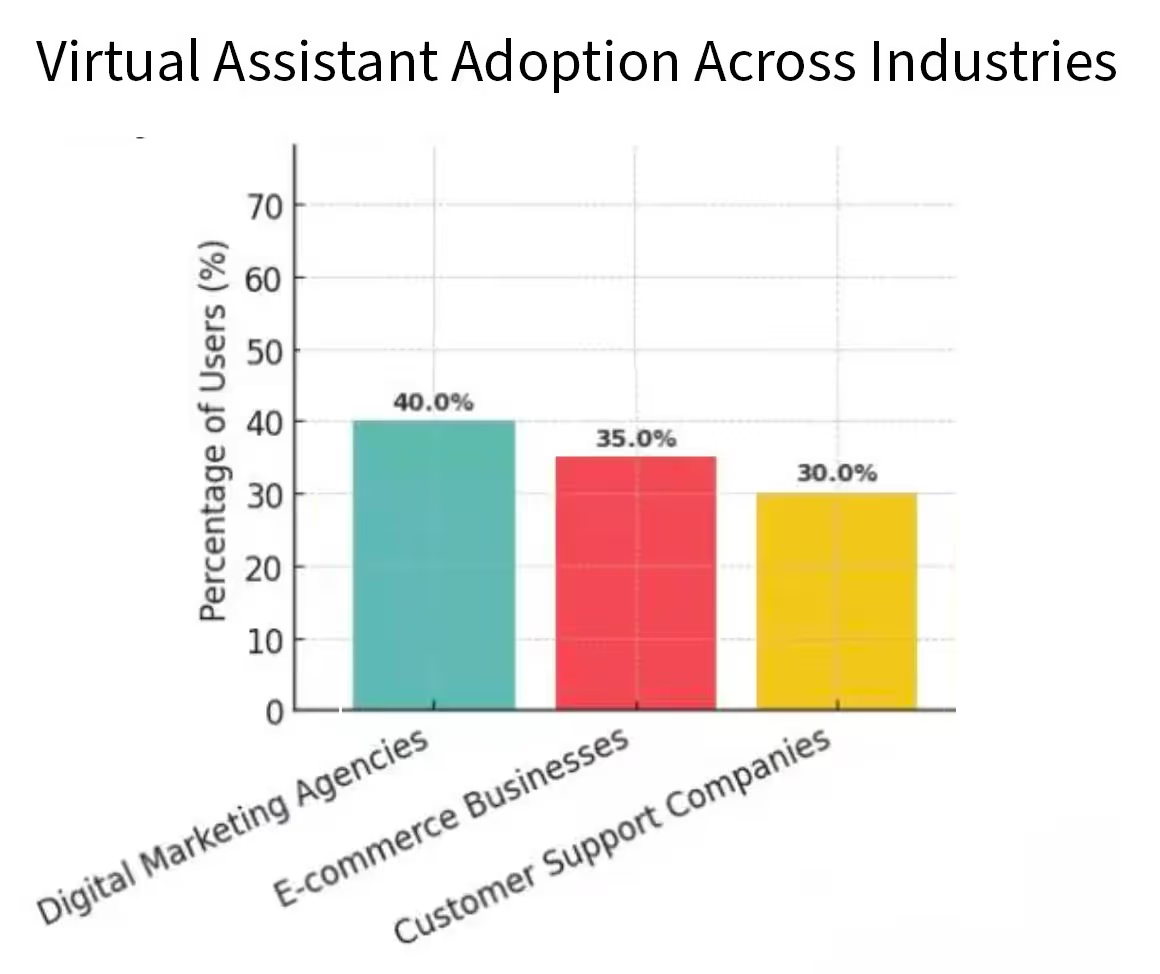
Among industries adopting virtual assistants for day-to-day operations, 40% of digital marketing agencies, 35% of ecommerce businesses, and 30% of customer support companies have implemented VAs in their workflows.
Source: ai2people.
9. 37.7% of businesses use virtual assistants for administrative work
Administrative support remains the most common use case for virtual assistants, with nearly four in 10 businesses employing VAs for back office support tasks such as scheduling, email management, data entry, and internal coordination.
Source: ai2people.
10. 20.5% of businesses use virtual assistants for marketing tasks
About one in five businesses now rely on marketing outsourcing for content scheduling, campaign coordination, performance tracking, and social media management.
This reflects a broader trend of VAs moving beyond basic admin into revenue-adjacent functions that support growth without requiring full-time in-house hires.
Source: ai2people.
11. 14% of businesses use virtual assistants for sales and prospecting
A growing segment of companies use virtual assistants for sales-related activities such as lead research, CRM updates, outreach support, and appointment setting.
This adoption shows that virtual assistants are increasingly trusted with front-of-funnel and pipeline-support work that directly impacts revenue generation.
Source: ai2people.
Virtual Assistant Workforce Statistics
12. The global human virtual assistant workforce was estimated at 3.9 million people
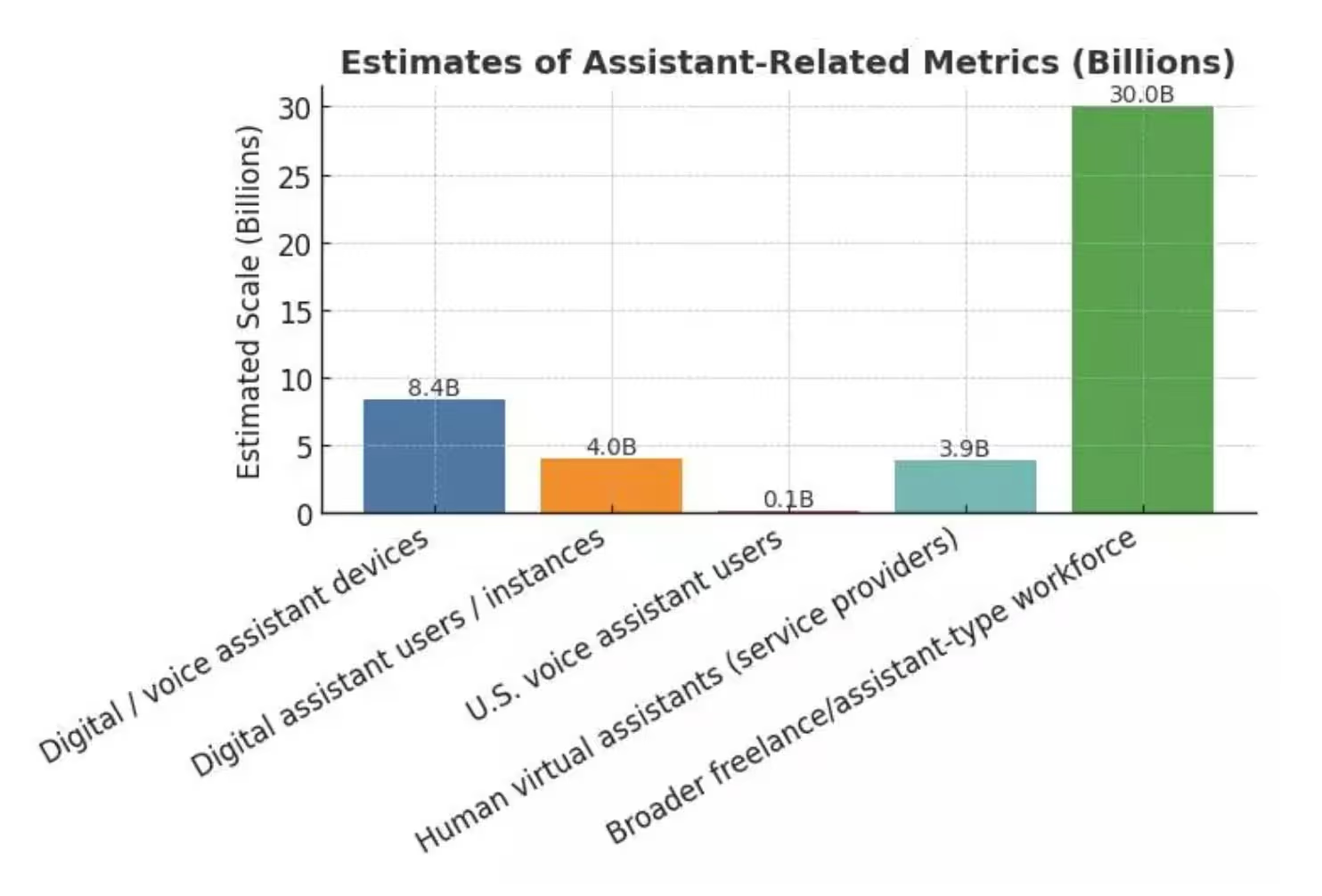
Projections show continued growth into the mid-millions by the late 2020s. This excludes AI assistants and focuses on individuals providing remote administrative, customer support, marketing, and specialized services, highlighting the scale of the human VA labor market.
Source: ai2people.
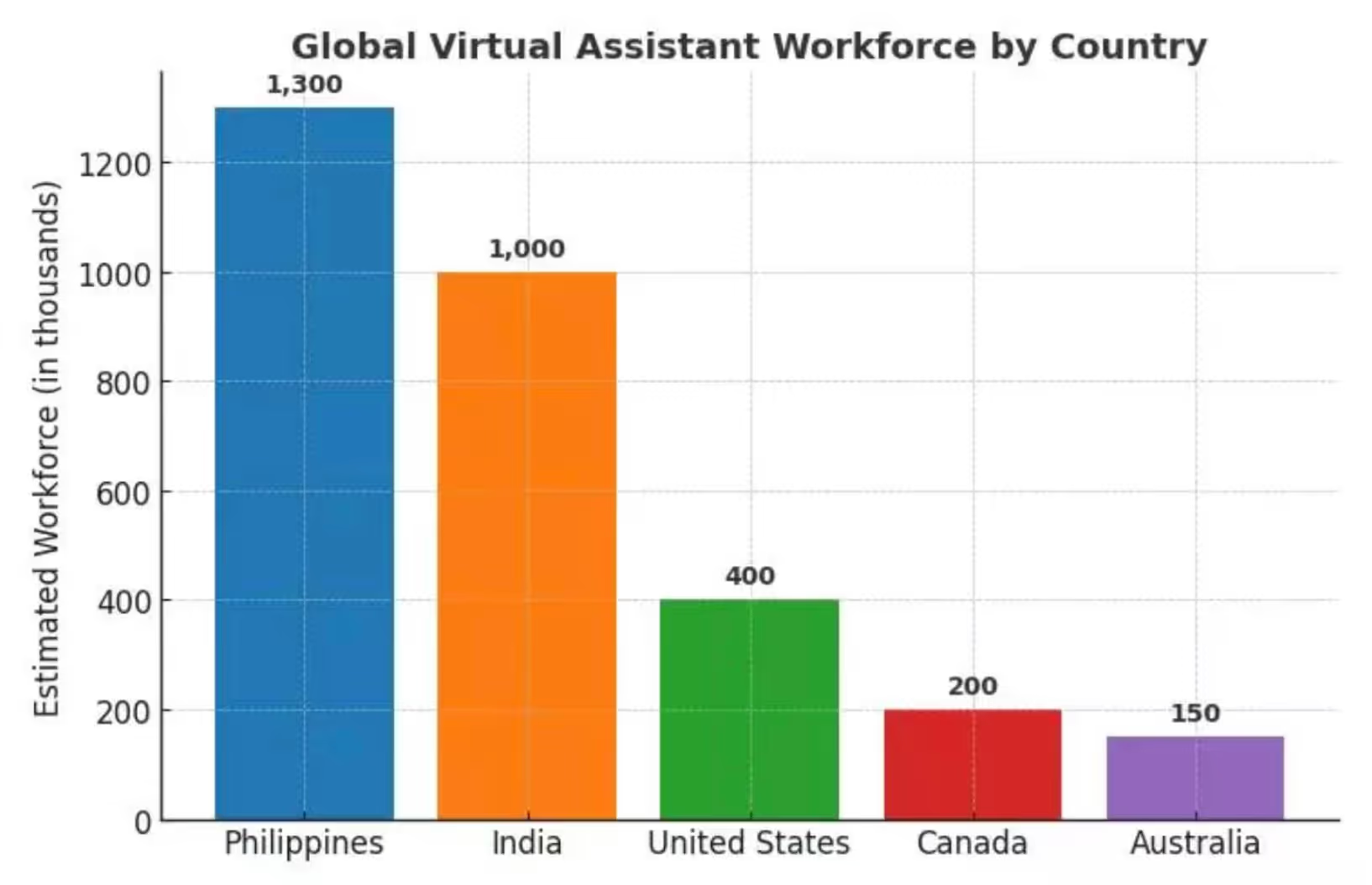
13. The Philippines employs over 1.3 million virtual assistants—more than any other country
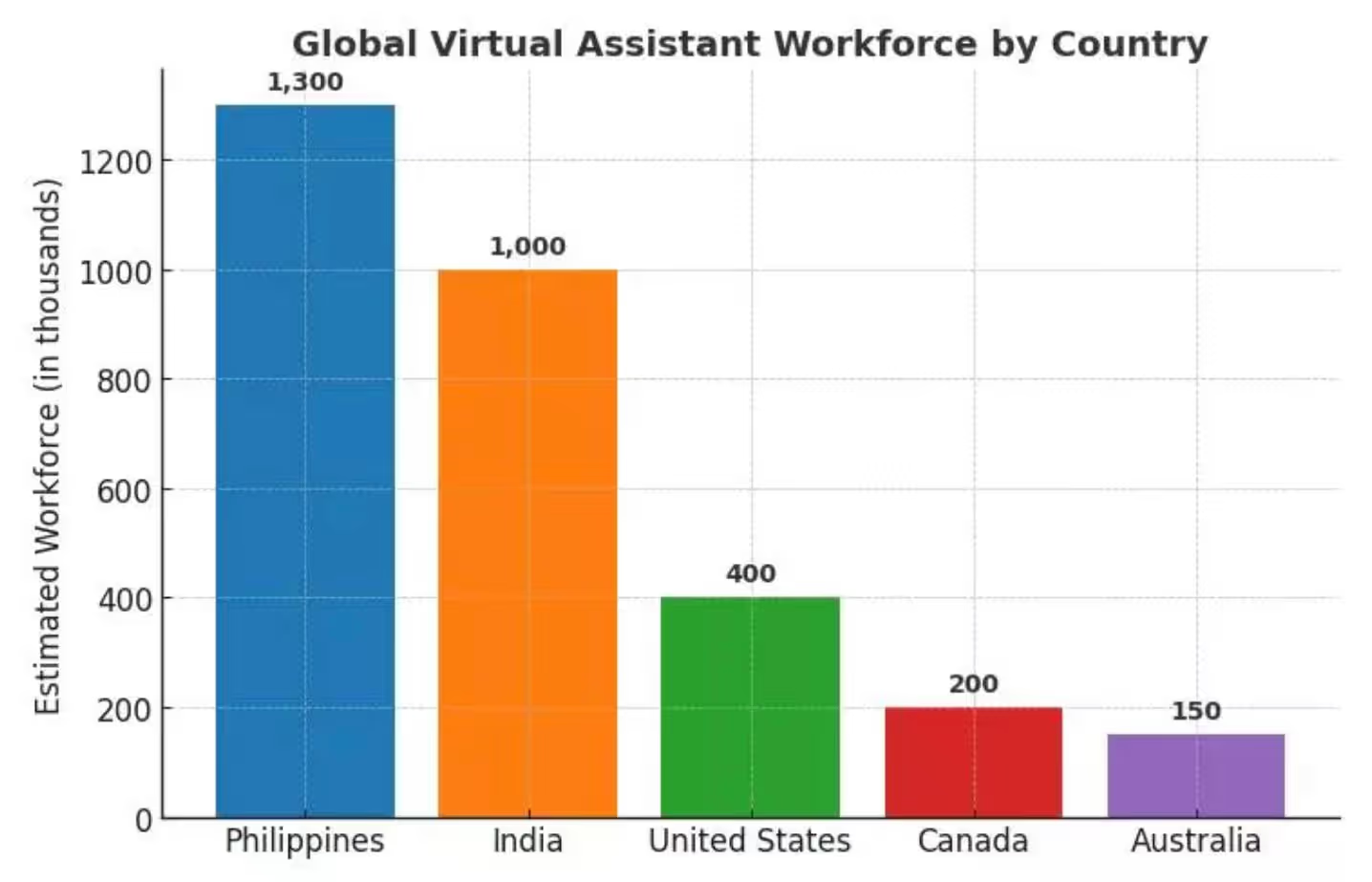
The Philippines leads India (1 million), the United States (400,000), Canada (200,000), and Australia (150,000) to remain the world’s leading hub for virtual assistant talent. In fact, it’s the second-largest industry in the country.
English proficiency, cultural alignment with Western businesses, and a mature outsourcing infrastructure continue to make the country a leader in virtual assistant services.
Source: ai2people.
14. About 59% of virtual assistants work full-time, not just freelance
While virtual assistants are often associated with freelance work, nearly six in 10 virtual assistants are full-time employees.
This highlights a growing interest in stable, dedicated remote roles in addition to ad-hoc task outsourcing. For businesses, long-term VA partnerships can offer continuity, process ownership, and deeper system familiarity.
Source: AOVUP.
15. Nearly 60% of virtual assistants are college graduates
Virtual assistant statistics reveal these workers are increasingly skilled, with nearly six in 10 having earned a college degree. Many now support functions beyond basic admin, including sales, marketing, real estate, and web development. This shows that outsourced virtual assistants can manage judgment-based and process-driven work, not just task execution.
Source: AOVUP.
Virtual Assistant Statistics - Remote Work and Productivity
16. About 50% of the U.S. workforce will be virtual by 2028
This shift is driven by freelancers, contractors, and remote service roles, reflecting structural changes in how companies staff customer support, operations, and other functions that can be outsourced to virtual assistants.
Source: AOVUP.
17. More than 50% of employees work remotely at least 2.5 days per week
This remote work statistic indicates an environment of remote collaboration that makes integrating outsourced virtual assistants easier, as teams already rely on shared tools, asynchronous communication, and distributed workflows.
Source: AOVUP.
18. Remote workers, including virtual assistants, are 13% more productive than in-office workers
Reduced interruptions, fewer meetings, and flexible scheduling contribute to higher output. Virtual assistant outsourcing provides businesses of all sizes access to skilled remote workers for a wide range of services.
Source: AOVUP.
Intelligent Virtual Assistant Statistics
19. The global IVA market is expected to triple over the next 5 years
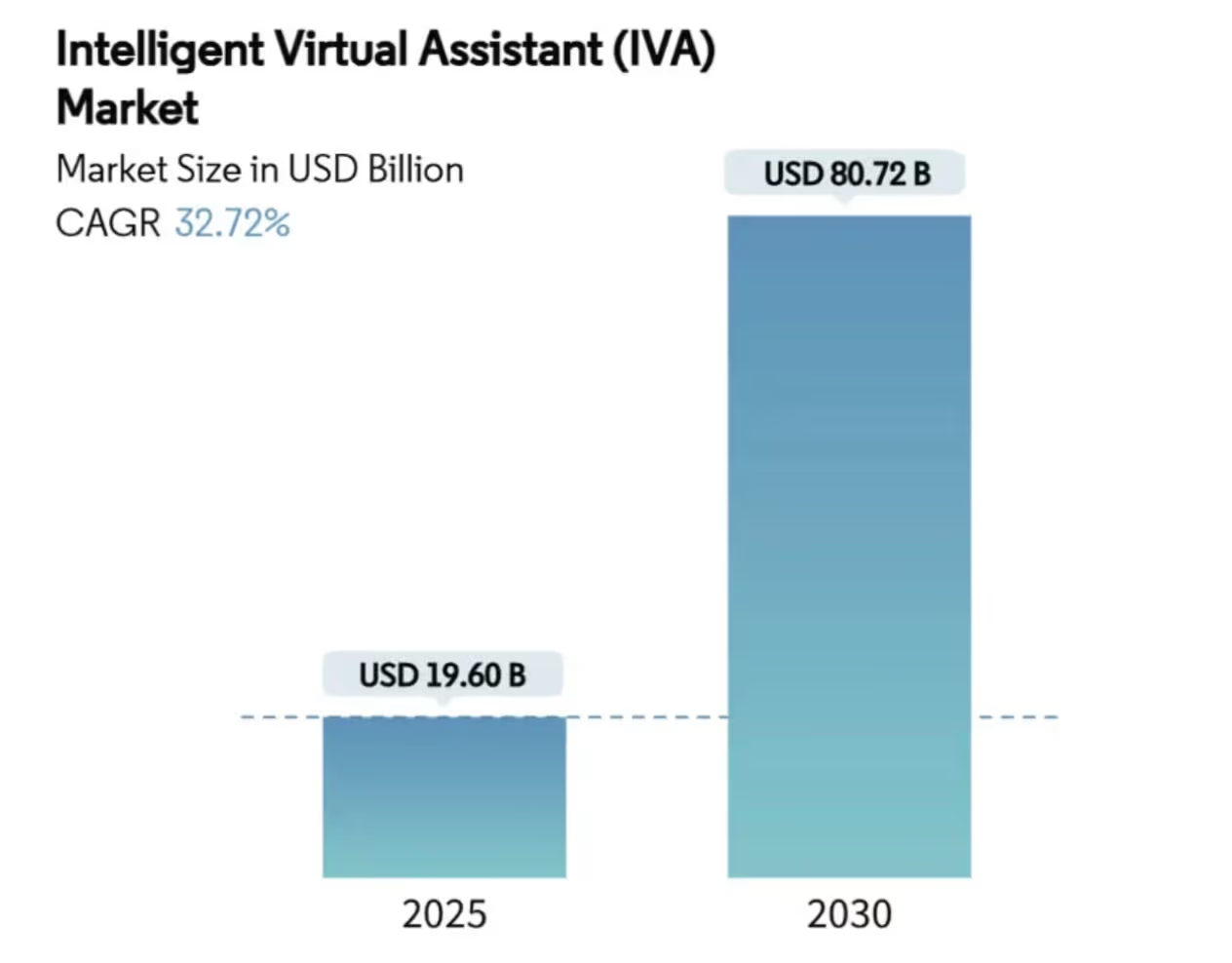
Valued at $19.6 billion in 2025, the global intelligent virtual assistant (IVA) market size is projected to reach $80.72 billion by 2030 with a compound annual growth rate (CAGR) of 32.7%.
AI-based IVAs driving the AI global virtual assistant market include chatbots, smart speakers like Google Home and Amazon Alexa, and voice-based or text-based AI assistants.
The largest market is North America, while the fastest growing market is Asia-Pacific. Major players, in no particular order, are Amazon, Microsoft, Inbenta, IBM, and Apple.
Source: Mordor Intelligence.
20. Shifting support work to virtual assistants saves businesses up to $10 million annually
A global travel company reported $10 million in annual savings after launching a virtual assistant-led self-service channel. Although this example involves AI, the cost drivers apply directly to outsourced human virtual assistants: removing high-volume, repetitive work from in-house teams.
Savings come from lower labor costs, reduced overtime, and shifting internal staff to higher-value work. Most organizations use a hybrid model, combining human virtual assistants with automation to maintain efficiency without sacrificing service quality.
Key drivers include:
- Lower costs vs. in-house hiring
- Reduced support volume and backlog
- 24/7 coverage without burnout
- Faster handling of common requests
Source: Mordor Intelligence.
21. Early adopters report up to 40% productivity gains from chatbot and IVA deployments
Early adopters of chatbots and IVAs report productivity gains of up to 40%, largely by automating repetitive, high-volume interactions. These systems deflect routine requests before they reach human teams, reducing workload and speeding up responses.
For companies that outsource virtual assistants, these figures matter because chatbot-driven efficiency is typically paired with human virtual assistants who handle non-automatable work such as inbox management, CRM updates, scheduling, follow-ups, and exception handling.
The result is fewer interruptions, faster resolution of routine tasks, and higher output without adding headcount.
Source: Mordor Intelligence.
22. Up to 90% of routine requests can be resolved without involving in-house employees
Across industries, approximately 80-90% of routine customer inquiries can be resolved without involving on-site or full-time employees. In a hybrid model, automation can manage initial intake while human virtual assistants handle execution, follow-ups, and exceptions.
Common examples include order or account status requests, appointment scheduling, data entry and CRM updates, and basic FAQ responses.
Offloading this work to outsourced virtual assistants or IVAs allows internal teams to focus on complex, judgment-based interactions while maintaining fast, consistent support for high-volume requests.
Source: Mordor Intelligence.
Human vs AI Virtual Assistant Statistics
23. About 75% of customers still prefer to communicate with a human
Despite rapid advances in automation, three out of four customers would rather talk to a human than a chatbot, voice assistant, or other IVA.
This can be particularly true when the situation requires judgment or emotional nuance, or involves higher stakes, such as customer support, live chat, or tech support.
To improve customer satisfaction, many companies outsource virtual assistants rather than fully embracing artificial intelligence and automation.
Source: BusinessWire.
24. 8.4 billion voice-assistant-enabled devices are in use—exceeding the global population
While this figure relates to AI-powered assistants rather than human VAs, it illustrates how normalized “assistant-led” interactions have become for both consumers and businesses.
This widespread adoption has indirectly accelerated acceptance of human virtual assistants in professional settings.
Source: ai2people.
25. Privacy concerns remain a barrier, with over 45% of users hesitant to share sensitive data with assistants
Nearly half of users report discomfort sharing sensitive information with virtual assistants, particularly AI-driven systems.
This hesitation helps explain why many companies continue to favor outsourced human virtual assistants for customer support, live chat, and high-trust workflows where judgment and discretion are required.
Source: ai2people.
What These Virtual Assistant Statistics Reveal
Overall, these virtual assistant statistics point to a hybrid future where businesses combine technology and skilled remote professionals to scale efficiently and remain competitive. Here are some key takeaways:
- Virtual assistants are no longer a fringe outsourcing option; they are now a mainstream part of modern business operations across companies of all sizes and industries.
- Rapid market growth, rising job postings, and strong enterprise adoption show that hiring VAs is driven by long-term structural shifts—not short-term cost cutting.
- Businesses increasingly rely on virtual assistants to streamline administrative work, marketing, sales, and customer-facing processes while maintaining flexibility and controlling price and overhead.
- Adoption spans various industries, including healthcare, ecommerce, finance, insurance, legal, and hospitality, proving that virtual assistants are trusted beyond basic support roles.
- Explosive growth in healthcare outsourcing demonstrates that even regulated, complex environments rely on VAs for sensitive business processes like scheduling, billing, and patient follow-ups.
- Workforce data challenges outdated assumptions: most virtual assistants work full-time, many are college educated, and a growing number bring specialized skills.
- These specialized skills include bookkeeping, web development, sales support, and other revenue-adjacent functions.
- The rise of intelligent virtual assistants and smartphone-based tools shows how automation complements human talent rather than replacing it.
- While AI handles high-volume tasks, customer preference and privacy concerns continue to favor human virtual assistants for judgment-based and high-trust work.
How Remote CoWorker Can Help
Remote CoWorker makes it easy to build and scale your team with skilled virtual assistants across bookkeeping, customer support, call center operations, marketing, sales, and more.
Our VAs bring specialized skills to help you streamline business operations, reduce costs, and improve efficiency. Whether you’re in healthcare, ecommerce, finance, or hospitality, or another industry, we match you with talent that fits your needs and company culture.
Let’s build your team—find remote talent that can handle critical business processes while you focus on growth. Schedule a free strategy call today.




.svg)
.svg)


